Admin panel & internal dashboard development
Most businesses run their daily operations across a handful of chats and a spreadsheet, which works until two people update the same order at once, or someone who shouldn't see refund data has access anyway because there was never a reason to lock it down. An internal dashboard replaces that with one screen and roles that actually mean something.
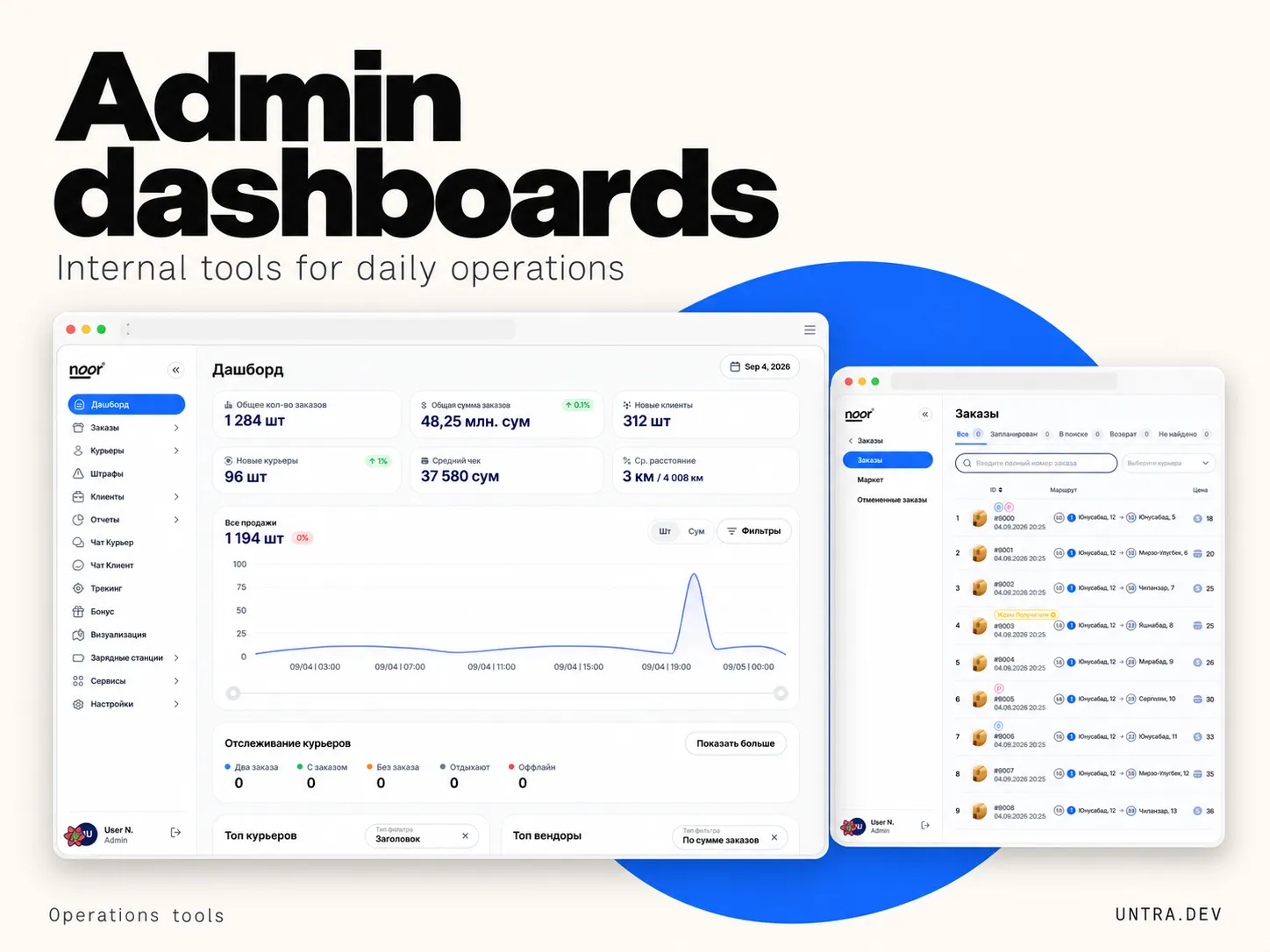
What is included
- Order status pipeline, start to finish
- Role-based access — who sees and can do what
- Live reports and tracking
- Client and branch management
- Handoff of the exact permission model your team needs, not a generic one
Scoped to what you actually need to run day one, not a rebuild of everything at once.
Who this is for
For delivery, commerce, and operations teams whose daily work has outgrown spreadsheets, shared chats, or a generic back office.
Problems this solves
- Order state and responsibility are unclear across the team.
- Sensitive actions and data need role-based permissions.
- Managers need live operational reports instead of manual reconciliation.
What you receive
You receive an internal web application shaped around the real workflow: clear states, permissions, searchable records, and the reporting needed to run day-to-day operations.
How the work starts
Send a written brief with the current workflow, user roles, existing data sources, and the decisions the dashboard must support. Scope and milestones are agreed in writing and the engagement is created through Contra.
Deliverables, milestones, and payment terms are set in the Contra proposal.
Relevant case studies
The role-based access system on BUCHET.UZ's admin panel — who can see what, edit what, and delete what — was designed and built solo from scratch. Noor's operations panel is the largest system I've built: courier management, live tracking, and the company's financial transactions.
Questions worth answering before you ask
Usually yes, and that's the actual goal, one place instead of a spreadsheet plus three chats. Migrating existing data in is part of scoping the project, not an afterthought.
Yes, that's specifically what I built for BUCHET.UZ from scratch: roles, permissions, and restricting both page access and navigation by what a role is allowed to see.
You do. The repository is handed over, there's no separate fee to buy the source, it's yours from the start.